
Depth-first search
Right now, we figured out how to check whether a path from a node to another node exists. However, even though we only care about one specific destination node (), the worst-case complexity of the code we wrote previously is . For example, consider the following graph:
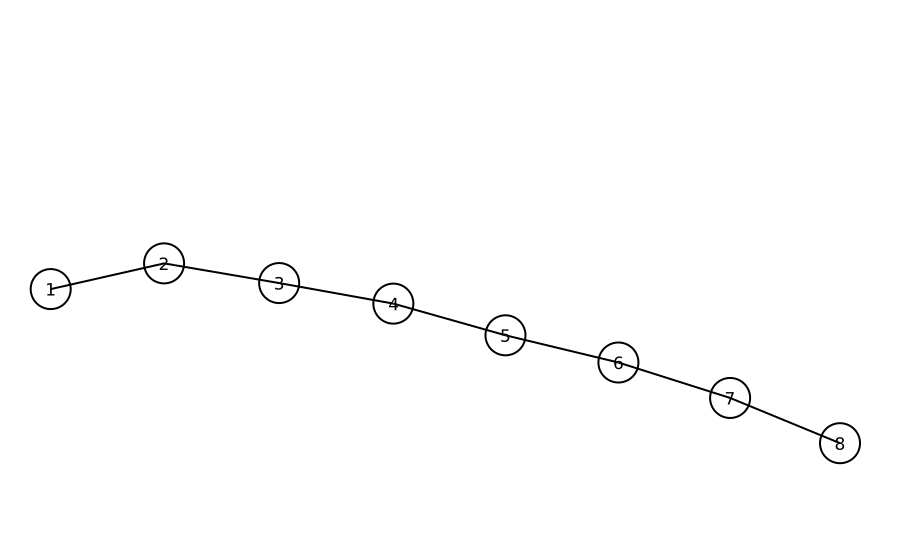
If and , we traverse all nodes and all edges before realising that there is a path from to .
For this reason, we usually solve this problem in two steps:
- Visit every node we can (without stopping!) from node , while continuing to track visited nodes
- Then check if was visited—that is—whether or not
vis[b]is true
This has the same worst-case time complexity, but we now know whether or not a path exists from to every other node in the graph.
Here’s how we’d code this:
vector<bool> vis;

void explore(int u) {
  if (vis[u]) {
    return;
  }
  vis[u] = true;

  for (int &i : adj[u]) {
    explore(i);
  }
}

dfs(a);
// now check the value of vis[b]!
As you may have guessed, the explore() function we just coded is commonly known as ‘depth-first search’. This is because the recursive structure of the function causes the graph to be explored ‘depth-first’.